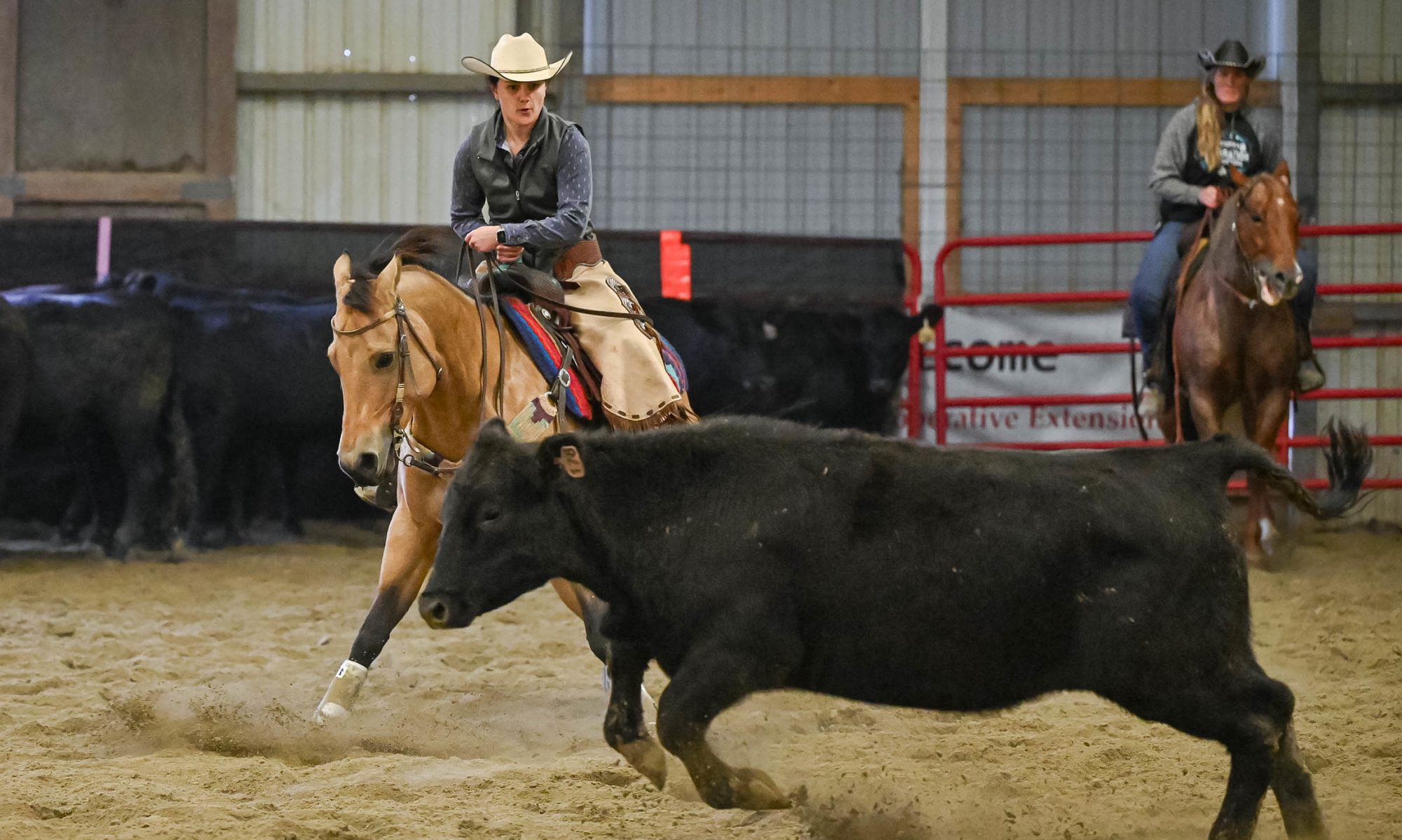

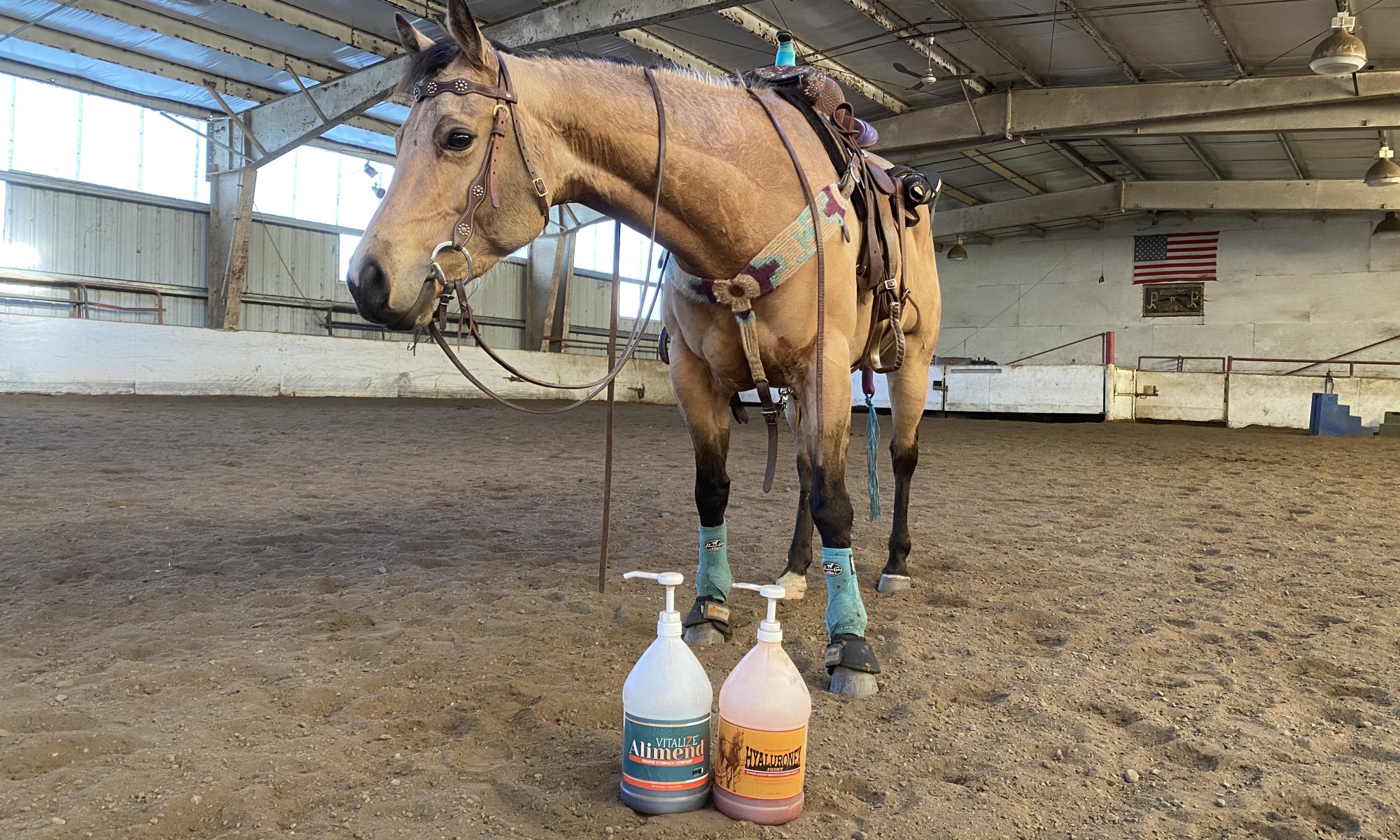
“Cure-alls cure nothing” is one of my favorite quotes from a medical based podcast. It is constantly in my head when I’m working and when I’m considering supplements for my horse. As you all know, the equine supplement world is full of cure-alls; supplements that are raved about but never fully explained. Well, as a scientist, word of mouth only goes so far with me before I start questioning ingredients.
When I first considered Vitalize’s Hyaluronex Joint supplement, I had El on their Alimend gut supplement for 60 days with great success. When researching Hyaluronex, the Vitalize website mentioned a proprietary blend of hyaluronic acid and generally, hyaluronic acid has been shown to help prevent osteoarthritis and to help with joint healing. So I figured it’d be a good supplement to have El on to help protect her joints. The Hyaluronex marketing video mentioned some antioxidants, but with all the over-use of “antioxidants” in general marketing, I can honestly say I didn’t dig very deep into their antioxidant ingredients.
After 60 days of being on Vitalize’s Hyaluronex Joint, El was a completely different horse, in an unexpected (but good) way. As discussed in a previous blog post, El is homozygous for the IMM/MYHM1 mutation. She’s prone to unexplained lameness, muscle tie ups, and general muscle soreness in her back and hind end. Every day, before I would ride, I’d test her muscles to see which ones were more sore and we’d spend time working and stretching them out to get her comfortable. What was a normal and accepted reality of her genetic mutation, completely changed on Hyaluronex. Her muscle soreness coming out of her stall slowly faded away. She became more limber and able to stretch out more comfortably. Quite honestly, she became a happier and better horse.
So what the heck happened? Hyaluronic acid hasn’t been well documented as a muscle supplement. It was driving me nuts not knowing how this was helping my horse, but I knew it was. There was a month in there that I didn’t order her hyaluronex in time, and I thought, “well maybe I’ve just got her diet and workout figured out and this supplement isn’t doing as much as I thought it was”. With only a few weeks off of it, I was wrong… very wrong, and felt awful about accidentally taking her off of it. Her soreness and stiffness came back and I got her back on Hyaluronex as soon as I could.
Then, the Vitalize instagram had a post mentioning Astaxanthin as the ingredient in Hyaluronex that gave the supplement its bright red color (seriously, it looks like Tabasco). So, I started digging and it all made sense.
Astaxanthin is an antioxidant extracted from algae and yeast. During heavy exercise (or instances of genetic mutations that cause cellular stress), reactive oxygen species (ROS) are produced by the body and can cause cellular and tissue injury as well as abnormal inflammation. Antioxidants help prevent damage from ROS (imagine pacman eating the ghosts) and typically, there is a good balance of ROS and antioxidants in a normal horse in light to moderate work to offset any potential damage from ROS. The typical antioxidants in a horse’s diet include vitamin e, selenium, and vitamin c but in horses in moderate to heavy exercise, with an autoimmune disorder, with insulin insufficiency, or many other issues, their ROS to antioxidant ratios are off (more ROS, less antioxidants = inflammation, pain, and injury).
That’s where astaxanthin comes in. It has been shown to have greater antioxidant properties and efficiency than many other antioxidants found in equine diets. In fact, astaxanthin has been shown to reduce ROS both in AND outside cellular membranes; whereas, most other antioxidants can only reduce ROS in OR outside membranes. In horses, astaxanthin has been shown to reduce muscle damage in thoroughbreds and, in another study, has been shown to decrease “tying-up” in training horses. Although not clinically tested, another study suggested astaxanthin could potentially help horses with metabolic syndrome. Granted, equine studies with astaxanthin are limited but, as any equine researcher will tell you, equine studies in general are limited.
So what’s going on with El? With her IMM, she’s prone to increased ROS and muscle damage from a lack of exercise. Even with extra supplementation of vitamin e and selenium, she was still showing soreness. Adding Hyaluronex to her diet gave her enough efficient antioxidants that her body was able to control ROS and tissue damage. It’s important to note that Hyaluronex is not a cure-all, if she stresses out, has a vaccine. or injures herself, she will still go sore. But for her day to day, it has helped her tremendously. In instances I expect her to be stressed or work a little harder, I’ll double her dose to try and limit soreness.
I am a big fan of Vitalize Hyaluronex Joint, and quite honestly, all of their products. But in my world, with a high maintenance horse in moderate to heavy exercise 5 days a week and prone to muscle tying, Hyaluronex is by far my favorite supplement that my horse gets. If you don’t know already, I do content creation for Vitalize. But, with the science backing and my before/after experience with their products, I would buy these products in a heart beat, even if I wasn’t working with them.
If you want to check out their website, click here. If you’d like to try their products, use code HANAH10 for a discount.
Another awesome (and new) fact about both Vitalize Hyaluronex and Alimend? They’re both approved by the FEI, USEF, and IFHA! This means their ingredients safe and cleared by third party laboratories to be used in competition horses.
Want to read my resources? Check out the literature below. Don’t have access? Email me and I’ll send you the pdf.
Sato, F., Omura, T., Ishimaru, M., Endo, Y., Murase, H., & Yamashita, E. (2015). Effects of daily astaxanthin and l-carnitine supplementation for exercise-induced muscle damage in training Thoroughbred horses. Journal of Equine Veterinary Science, 35(10), 836-842.
https://www.sciencedirect.com/science/article/pii/S0737080615005031
Sato, F., Omura, T., Ishimaru, M., Korosue, K., Endo, Y., Murase, H., … & Yamashita, E. (2013). Effects of astaxanthin and L-carnitine supplement on muscle damage and incidence of equine tying-up syndrome. In Proceedings of the 59th Annual Convention of the American Association of Equine Practitioners, Nashville, Tennessee, USA, 7-11 December 2013. American Association of Equine Practitioners (AAEP).
https://www.cabdirect.org/cabdirect/abstract/20143210460
Mularczyk, M., Bourebaba, N., Marycz, K., & Bourebaba, L. (2022). Astaxanthin Carotenoid modulates oxidative stress in adipose-derived stromal cells isolated from equine metabolic syndrome affected horses by targeting mitochondrial biogenesis. Biomolecules, 12(8), 1039.
 Rein It In